Webull vs Robinhood 2026: Which Commission-Free Broker Is Actually Better?
Deciding between Webull and Robinhood in 2026 is something a lot of new and intermediate investors wrestle with. Both platforms essentially kicked off the commission-free trading revolution, and they've both changed a lot since then — but they've gone in pretty different directions. Robinhood has built out a full financial ecosystem complete with credit cards, retirement accounts, and a Gold subscription tier. Meanwhile, Webull has focused heavily on advanced charting, extended trading hours, and tools designed for traders who actually dig into the numbers.
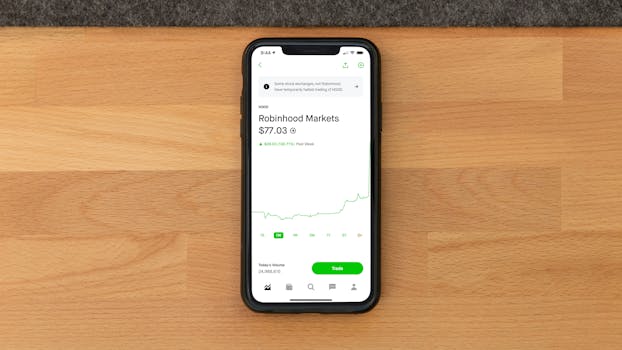 Photo by Andrew Neel on Pexels
So which one is worth your time and money? Let's break down the real differences — from features and fees to how the mobile apps actually feel and what kind of customer support you'll get — so you can figure out which one matches your trading style.
This guide works for anyone thinking about these two brokers, whether you're opening your first account or considering a switch.
Quick Comparison Table: Webull vs Robinhood 2026
| Feature | Webull | Robinhood |
|---|---|---|
| Commission-Free Stocks & ETFs | ✅ Yes | ✅ Yes |
| Options Trading | ✅ Yes (free) | ✅ Yes (free) |
| Cryptocurrency Trading | ✅ Yes (limited selection) | ✅ Yes (broader selection) |
| Fractional Shares | ✅ Yes | ✅ Yes |
| Retirement Accounts (IRA) | ✅ Traditional & Roth | ✅ Traditional & Roth (with match) |
| Advanced Charting | ✅ Extensive | ⚠️ Basic-to-moderate |
| Paper Trading | ✅ Yes | ❌ No |
| Extended Hours Trading | 4:00 AM – 8:00 PM ET | 7:00 AM – 8:00 PM ET (24/5 for some) |
| Premium Subscription | ~$0 (most features free) | Robinhood Gold: $5/mo |
| Cash Sweep / APY | ~4.5% (with promo) | 4.0%–5.0% (Gold members) |
| Credit Card | ❌ No | ✅ Robinhood Gold Card |
| Desktop Platform | ✅ Full desktop app | ✅ Web-based |
| SIPC Insured | ✅ Yes | ✅ Yes |
| Best For | Active/technical traders | Beginners & all-in-one finance |
| App Store Rating | ~4.7 ★ | ~4.3 ★ |
 Photo by Sandra Filipe on Pexels
Webull Overview
Webull hit the scene in 2018 and quickly positioned itself as the "serious trader's" alternative to Robinhood. It's a commission-free brokerage offering stocks, ETFs, options, and crypto — but what really sets it apart is the suite of analytical tools, technical indicators, and extended trading hours packed into the platform.
The platform runs on a fully electronic brokerage model and is regulated by the SEC and FINRA. Through 2025 and into 2026, Webull has kept refining its desktop application and rolled out more educational content, but the core focus remains on people who want real charting tools without the price tag of a traditional brokerage.
Key Features
- 50+ technical indicators and advanced charting with multiple chart types
- Paper trading with simulated portfolios (perfect for testing strategies risk-free)
- Extended hours trading from 4:00 AM to 8:00 PM ET — one of the widest windows you'll find
- Full desktop application available for Windows and Mac alongside the mobile app
- Financial calendars tracking earnings, dividends, IPOs, and economic events
- IRA accounts (Traditional and Roth)
- Commission-free options with no per-contract fees
Pricing
Here's where Webull shines: most of its powerful features are completely free. No premium subscription needed to access advanced charting, extended hours, or paper trading. You'll hit standard regulatory fees (SEC and FINRA fees on sells, tiny fractions of a cent per share), but these exist on every broker. Margin accounts are available with reasonable interest rates, starting around 6.49% depending on your balance.
8-chapter comprehensive budgeting guide with 3 interactive calculators. Stop living paycheck to paycheck.
Robinhood Overview
Robinhood is essentially the app that forced every other brokerage to go commission-free. Since launching in 2013, it's grown from a stripped-down stock app into a surprisingly full-featured financial platform. As of 2026, you can trade stocks and options, manage IRAs with matching contributions, use a credit card, get high-yield cash management, and unlock premium features with Gold.
The company went public (ticker: HOOD) and operates under SEC, FINRA, and state regulatory oversight. It's SIPC-insured and has made real strides improving infrastructure and support since the GameStop controversy back in 2021.
Key Features
- Robinhood Gold ($5/month): Better cash APY (currently 4.0%–5.0%), Morningstar research, Level II data, bigger instant deposit limits
- IRA with match: Robinhood matches 1% of contributions (3% for Gold members) — something you won't find many places
- Robinhood Gold Card: A credit card offering 3% cashback (for Gold members) on purchases
- 24-hour trading on select securities (available 5 days a week)
- Cryptocurrency trading with more coins than Webull offers
- Robinhood Legends: A newer desktop-focused platform with stronger charting and improved options tools
- Fractional shares starting at $1
- Recurring investments for automated dollar-cost averaging
Pricing
A standard Robinhood account is free with commission-free trades. Robinhood Gold runs $5/month and opens up better research, higher APY on cash, larger instant deposits, and that higher IRA match. Margin interest starts around 5.75% for Gold members. Honestly, the Gold subscription often pays for itself pretty quickly if you're parking even a modest amount of cash thanks to the better interest rate.
Feature-by-Feature Comparison: Webull vs Robinhood 2026
User Interface & Ease of Use
Robinhood wins hands down on simplicity. The app is clean, visually polished, and designed so that someone who's never bought a stock before can figure it out in minutes. Buying a share takes just a few taps. There's basically no learning curve.
Webull's interface is intentionally more involved. Open the app and you're facing candlestick charts, order book data, and multiple tabs packed with technical information. For a complete beginner, that can feel overwhelming. For someone who actually uses that data, though? It's exactly what you're looking for.
Winner: Robinhood for beginners, Webull for intermediate and advanced users.
Core Features & Trading Tools
This is where Webull pulls ahead for serious traders. The platform delivers:
- Over 50 technical indicators (RSI, MACD, Bollinger Bands, and more)
- Multiple chart layouts and fully customizable timeframes
- Real-time Level II data (Nasdaq TotalView) included at no extra cost
- Paper trading to test strategies without risking real money
- Short selling capabilities
Robinhood has made improvements with the Robinhood Legends desktop platform (launched late 2024/early 2025), bringing better charting and multi-leg options strategies to the table. Still, it doesn't touch Webull's depth. Robinhood's real strength lies elsewhere — in the broader financial ecosystem. The IRA match, credit card, and cash management features are things Webull doesn't even attempt to offer.
Winner: Webull for trading tools, Robinhood for breadth of financial products.
Integrations & Ecosystem
Robinhood has built something broader here. Your brokerage, IRA, crypto wallet, cash card, credit card, and high-yield savings alternative all sit in one app. It connects with tax software for 1099 exports and makes transferring money from external banks straightforward.
Webull integrates well with financial data feeds and supports account transfers via ACATS, but it hasn't assembled the same all-in-one financial hub. If you're someone who loves having everything money-related in a single app, Robinhood is ahead of the curve.
Winner: Robinhood.
Pricing & Value
Both offer commission-free stocks, ETFs, and options trading. Both charge standard regulatory fees. Here's where the nuance matters:
| Cost Factor | Webull | Robinhood |
|---|---|---|
| Stock/ETF trades | Free | Free |
| Options (per contract) | Free | Free |
| Crypto trading fees | Spread markup | Spread markup |
| Premium subscription | N/A (free tools) | $5/mo (Gold) |
| Margin interest | ~6.49%+ | ~5.75% (Gold) |
| Cash APY | ~4.5% (varies) | ~4.0–5.0% (Gold) |
| IRA match | None | 1%–3% |
On pure trading costs, they're basically identical. But Robinhood Gold at $5/month actually delivers real value if you use the IRA match (free money, essentially), enjoy the higher APY, and take advantage of the credit card cashback. The flip side is Webull's advanced features don't cost you anything upfront.
Winner: Tie — it comes down to what matters most to you. Webull gives you more without spending extra; Robinhood Gold offers more total value for just $5/month.
Customer Support
Historically, both platforms struggled with support. Robinhood especially took heat early on for email-only support. By 2026, things have shifted:
- Robinhood now provides 24/7 phone support to everyone, plus live chat and in-app messaging. Gold members get priority treatment. This is a significant improvement from the past.
- Webull has email support, in-app chat, and phone support during market hours. Response times are generally fine, but not as quick as Robinhood's current system.
Winner: Robinhood — they genuinely invested in making support better.
Mobile App Experience
Both are solid, but they're built for different needs.
Robinhood's mobile app is one of the slickest fintech apps you'll use. Smooth animations, intuitive navigation, and a design philosophy that gets out of your way. Using it daily is actually enjoyable.
Webull's mobile app crams desktop-level information into your phone. You can run multi-indicator charts, check the order book, set complex alerts, and trade options spreads — all from your pocket. It's powerful but information-dense.
Both score high: Webull sits around 4.7 stars on app stores, while Robinhood hovers around 4.3 (still dragged down somewhat by older 1-star review campaigns from years past).
Winner: Robinhood for casual use and design polish, Webull for on-the-go analysis.
Security & Compliance
Both brokers are SEC-registered, FINRA members, and SIPC-insured (up to $500,000 per account, with $250,000 allocated for cash). Both offer two-factor authentication and biometric login.
Robinhood, being publicly traded, faces extra scrutiny and must provide transparency through quarterly SEC filings. Webull's clearing runs through Apex Clearing (plus its own Webull Financial LLC for certain operations), a respected clearing firm.
Neither has experienced a major data breach, and both have matured significantly in their compliance and risk management practices.
Winner: Tie — both meet industry standards solidly.
 Photo by Елена on Pexels
Pros and Cons
Webull
| Pros | Cons |
|---|---|
| Advanced charting & 50+ indicators — and it's all free | Steeper learning curve for newcomers |
| Paper trading for risk-free strategy testing | Smaller selection of cryptocurrencies |
| Extended hours trading (4 AM – 8 PM ET) | No IRA contribution match |
| Full desktop application | Less robust customer support than Robinhood |
| Free Level II market data included | No credit card or cash management card |
| Zero premium subscription needed | Smaller range of financial products overall |
Robinhood
| Pros | Cons |
|---|---|
| Beautifully simple interface, great for beginners | Charting tools don't match Webull's depth |
| IRA match (1%–3%) — essentially free money | Gold subscription needed for premium features |
| Robinhood Gold Card (3% cashback) | No paper trading feature |
| 24/7 phone support with real humans | Can feel too simplified for serious traders |
| Wider selection of cryptocurrencies | Has dealt with regulatory issues in the past |
| One app for brokerage, retirement, crypto, and credit | Narrower extended hours window |
Who Should Choose Webull?
Webull makes more sense if you:
- Trade actively or swing trade and rely on technical analysis. The charting tools, indicators, and real-time data are significantly deeper.
- Want to practice without real money at stake. Paper trading is genuinely useful and Robinhood doesn't offer it.
- Trade before market open or after close. Webull's 4:00 AM – 8:00 PM ET window is seriously wide for retail traders.
- Prefer not to pay for a subscription but still want professional-grade tools.
- Have some trading experience and feel constrained by overly simple interfaces.
And honestly? Webull is a free upgrade for anyone using Robinhood who's started hitting its limitations.
Who Should Choose Robinhood?
Robinhood is the better fit if you:
- Are just getting into investing and want the smoothest possible experience.
- Want to consolidate your finances — brokerage, IRA, crypto, credit card, and cash all in one place.
- Care about retirement investing and want that IRA match. Finding a 1% match (3% for Gold) is tough elsewhere without an employer.
- Plan to invest passively — set up recurring investments, buy fractional shares, and let them grow.
- Appreciate solid customer support — Robinhood's 24/7 phone line is a real plus.
- Are interested in crypto — Robinhood supports more tokens and keeps expanding crypto options.
Robinhood has evolved past being just "the simple stock app" and has become a genuine financial platform.
Verdict: Webull vs Robinhood 2026 — Which Should You Pick?
Here's what actually matters: the best choice really depends on how you invest.
Go with Webull if you trade actively, use technical analysis, or want powerful tools without monthly fees. It's the superior trading platform.
Go with Robinhood if you want a straightforward, clean experience backed by a growing ecosystem — especially if the IRA match, Gold Card, or cash APY interest you. It's the superior financial platform.
If you're brand new to investing, Robinhood is the safer starting point. The interface won't scare you, and you can always move to Webull later as you develop your skills. If you're comfortable reading charts and placing more than basic orders, Webull hands you more right away.
And here's something worth knowing: nothing stops you from using both. Plenty of traders keep Robinhood for long-term investing and retirement while running their active trading through Webull.
For other options worth looking at, Fidelity remains strong for retirement and research, while Interactive Brokers is the standard for advanced traders needing global market access.
FAQ: Webull vs Robinhood 2026
Is Webull or Robinhood better for beginners in 2026?
Robinhood edges ahead for beginners. Its interface is specifically built to feel intuitive and approachable. Webull's data-packed screens can be intimidating when you're just starting. That said, beginners serious about learning technical analysis might actually appreciate Webull's paper trading.
Is Webull really free? What's the catch?
Yes, it's genuinely free for most features — advanced charting, paper trading, extended hours, all included. Like every broker, you'll pay tiny SEC and FINRA fees on sell orders (fractions of a cent). Webull makes money through payment for order flow (same as Robinhood), margin interest, and securities lending.
Does Robinhood Gold's IRA match actually work?
Yes. In 2026, Robinhood matches 1% of eligible IRA contributions for regular users and 3% for Gold members. The match gets deposited into your IRA and is immediately yours. At $5/month for Gold, even modest annual IRA contributions can make the match exceed your subscription cost.
Can I transfer my account from Robinhood to Webull (or the other way)?
Yes. Both support ACATS (Automated Customer Account Transfer Service) transfers. The process usually takes 5–7 business days. Webull often offers transfer fee reimbursements as a promotion for new accounts — worth checking what they're running.
Which platform is safer — Webull or Robinhood?
Both are SIPC-insured (up to $500,000 per account) and regulated by the SEC and FINRA. Robinhood being publicly traded means extra financial transparency through SEC filings. Both use encryption, two-factor authentication, and biometric security. Neither has a safety advantage — they meet industry standards equally well.
Is Webull or Robinhood better for day trading?
Webull edges out for day traders thanks to advanced charting, a wider extended-hours window, and free Level II data. But keep in mind both enforce the Pattern Day Trader (PDT) rule — you need $25,000 minimum to make more than 3 day trades within 5 business days. That's federal regulation, not platform-specific.
Tools We Recommend
Building an online business or handling your digital presence? Here are the tools we trust:
- Kinsta — Premium managed WordPress hosting on Google Cloud. Starts at $35/mo with 30-day money-back guarantee.
- Cloudways — Flexible managed cloud hosting (AWS, GCP, DigitalOcean). Pay-as-you-go starting at $14/mo.
- Systeme.io — All-in-one marketing platform with funnels, email, and courses. Free plan available.
- Moosend — Affordable email marketing with solid automation. 30-day free trial, then $9/mo.
Disclosure: Some links above are affiliate links. We only recommend tools we've personally tested.