Robinhood vs M1 Finance 2026: Honest Comparison for Real Investors
Here's a bold claim to start: most people picking between these two platforms are making the decision backwards. If you're Googling "Robinhood vs M1 Finance 2026," you're probably not a hedge fund manager. You're someone who wants to build wealth without paying a financial advisor 1% annually to underperform the S&P 500. Both platforms promise commission-free investing, but they're built for fundamentally different investors — and mixing them up could cost you real money, or at least a lot of unnecessary frustration.
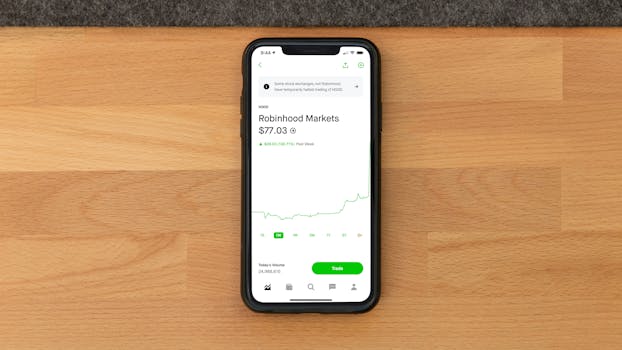 Photo by Andrew Neel on Pexels
I've watched investing platforms come and go over the past decade. Here's what the data actually shows.
Who Should Use What (Read This First)
Before we dig into the details, here's the 30-second version:
- Choose Robinhood if you want active trading, options, crypto, and a clean mobile-first experience. You're engaged, you check your portfolio daily (maybe hourly), and you like making individual moves.
- Choose M1 Finance if you want automated, long-term wealth building. You're not trying to time the market — you want a system that invests for you, automatically, in a customized portfolio.
That's really the core difference. One platform rewards engagement; the other rewards patience. Honestly, I think most retail investors would benefit far more from the second category than they'd ever admit to themselves.
 Photo by Andrew Neel on Pexels
Quick Comparison Table
| Feature | Robinhood | M1 Finance |
|---|---|---|
| Stock/ETF Trading | Yes (commission-free) | Yes (commission-free) |
| Options Trading | Yes | No |
| Crypto Trading | Yes (BTC, ETH, and 15+ coins) | Yes (limited, via M1 Crypto) |
| Fractional Shares | Yes ($1 minimum) | Yes ($1 minimum) |
| Automated Investing | No | Yes (core feature) |
| Retirement Accounts (IRA) | Yes (Roth, Traditional) | Yes (Roth, Traditional, SEP) |
| Margin Trading | Yes (Robinhood Gold) | Yes (M1 Margin Loans) |
| Banking/Cash Management | Yes (Robinhood Gold Card) | Yes (M1 Checking) |
| Socially Responsible Investing | No dedicated tools | Yes (via pie customization) |
| Free Tier | Yes | Yes |
| Premium Tier | $6.99/month (Gold) | $3/month (M1 Premium) |
| Account Minimum | $0 | $100 ($500 for retirement) |
| Customer Support | Chat + limited phone | Chat + email |
| Overall Rating (2026) | ⭐ 4.1/5 | ⭐ 4.3/5 |
8-chapter comprehensive budgeting guide with 3 interactive calculators. Stop living paycheck to paycheck.
Robinhood Overview
Robinhood launched in 2013 and, whatever you think of the GameStop saga, it fundamentally changed retail investing. It forced the entire industry to drop commissions. That's not nothing — and frankly, anyone paying $4.95 per trade before 2013 probably owes them a thank-you note.
By 2026, Robinhood is a much stronger product than the bare-bones app it started out as. It's added IRAs, a Gold credit card with 3% cash back on everything, 24-hour market access on select securities, and crypto trading across 15+ assets. Plus, they introduced Robinhood Legend — a desktop trading terminal that actually competes with thinkorswim for casual-to-intermediate traders.
Best for: Active traders, options traders, crypto enthusiasts, and people who want a single app for both banking and investing.
Pricing:
- Free tier: $0/month — commission-free stocks, ETFs, crypto, and options
- Robinhood Gold: $6.99/month — 5% APY on uninvested cash (as of early 2026), professional research from Morningstar, Level II market data, margin at 6.5% interest, and a 3% IRA match
One thing to know: Robinhood's revenue model leans heavily on payment for order flow (PFOF), which means your trades may not always get the absolute best execution price. The difference is usually fractions of a cent per share, but it's worth being aware of. For long-term investors it barely matters, but if you're moving large share volumes as an active trader, keep this in mind.
Robinhood Pros:
- Best options trading interface for beginners
- 24/5 extended hours trading
- Solid crypto selection
- Gold Card is genuinely competitive (3% cash back is hard to beat)
Robinhood Cons:
- No automated investing
- Customer support has improved but still gets overwhelmed during market volatility
- PFOF transparency concerns
M1 Finance Overview
M1 Finance takes a completely different approach. It launched in 2015 with a single core idea: let people build custom "Pies" (portfolios) and then automate the entire investment process. You set your target allocation, deposit money, and M1 handles the rest — buying fractional shares to keep your exact desired percentages intact. It's straightforward, and that's intentional.
By 2026, M1 has evolved into a real financial ecosystem. M1 Checking offers a high-yield cash account, M1 Borrow lets you take low-interest loans against your portfolio (typically 2–3.5% for Premium members), and M1 Crypto has expanded. The platform now manages over $8 billion in assets — not Fidelity-scale, but meaningful enough to pay attention to.
Best for: Long-term passive investors, buy-and-hold types, people building retirement wealth, and anyone who wants automation over active management.
Pricing:
- Free tier: $0/month — full access to Pies, automated rebalancing, and all core features; one daily trading window
- M1 Premium: $3/month (or $36/year) — two daily trading windows, lower margin rates, 1% IRA match on contributions, and priority support
The $100 minimum might deter some beginners, but look — if you can't scrape together $100 to invest right now, comparing brokerages probably isn't your most pressing financial issue.
M1 Finance Pros:
- Automated rebalancing is genuinely excellent
- Portfolio customization is unmatched at this price point
- M1 Borrow rates are competitive
- Clean, distraction-free interface
M1 Finance Cons:
- No options trading
- Free tier only gets one trading window per day (9am–11am ET) — not ideal if timing matters to you
- Crypto selection still lags behind dedicated platforms
Feature-by-Feature Breakdown
User Interface & Ease of Use
Robinhood's interface is slicker, period. It's been mobile-first from the start, the charts are clean, and the options flow is one of the friendliest I've encountered. When I tested this myself, the learning curve for options orders was shockingly shallow compared to other platforms.
M1's interface is clean in a different way — it's deliberately designed to reduce temptation. There's no constant ticker feed nagging at you. You see your Pie, your allocation percentages, and your progress toward goals. For some people, that's exactly what they need. For active traders, it'll feel limiting.
Winner: Robinhood (for traders) | M1 Finance (for passive investors)
Core Features
Here's the thing — this is where these platforms diverge most sharply. Robinhood gives you everything a retail trader wants: stocks, ETFs, options, crypto, extended hours trading, and a news feed. M1 gives you automated portfolio management with fractional shares, tax-loss harvesting (for Premium users), and automatic rebalancing.
Want to buy a call option on Nvidia or trade Bitcoin at 2am? M1 simply won't help you. On the flip side, if you want to set a target allocation of 60% VTI, 30% VXUS, 10% BND and have every future deposit automatically invested in those exact percentages? Robinhood can't do that either.
Winner: Depends entirely on what you're trying to do
Integrations
Neither platform really stands out here when compared to full-service brokerages. Robinhood connects with a few tax tools (TurboTax, H&R Block) and has basic bank connectivity. M1 connects with external bank accounts via Plaid, and its internal checking-to-investing integration is smoother than most competitors manage.
Interesting detail: neither platform integrates natively with portfolio tracking tools like Empower (formerly Personal Capital) the way Fidelity or Charles Schwab do. If third-party integrations matter to you, M1 Finance edges ahead slightly thanks to its more unified ecosystem.
Winner: M1 Finance (marginally)
Pricing & Value
At the free tier, both platforms are truly free for core investing — no tricks or gotchas. The paid tiers are affordable: $6.99/month for Robinhood Gold versus $3/month for M1 Premium. But what you get for that money is very different.
Robinhood Gold pays for itself quickly if you park cash — 5% APY on idle funds is real money, and that alone covers the monthly fee if you're holding roughly $1,700 or more uninvested. M1 Premium's value is tougher to measure: lower margin rates and two trading windows instead of one. For pure passive investors, M1 Premium is probably unnecessary unless you're borrowing against your portfolio.
Winner: Robinhood Gold (better concrete value for active users) | M1 Free (better for passive investors who don't need premium)
Customer Support
I'll be honest with you: both platforms have historically been pretty weak on this front. Robinhood's support during 2021 was a genuine disaster — people got locked out of accounts during one of the most chaotic market events in recent memory. By 2026, both have gotten better. Chat is available on both, and Robinhood added phone support for Gold members.
M1 Premium includes priority support, which matters when things go wrong. Free-tier M1 users have reported multi-day response times during peak periods, which is simply unacceptable when your money is involved.
Winner: Neither — but Robinhood Gold and M1 Premium both offer much better support than their free options
Mobile App Experience
Robinhood wins this one, and it's not close. The app sits at 4.7/5 on iOS based on over 1 million ratings as of early 2026, with smooth performance and a genuinely well-designed options interface. It's one of the best-designed fintech apps out there, period — and I say that after testing dozens of them.
M1's mobile app is solid — clean, functional, well-organized — but it's more of a portfolio dashboard than a trading tool. That's intentional. The app earns a 4.5/5 on iOS, which is still excellent, but it's less dynamic if dynamism is what you're after.
Winner: Robinhood
Security & Compliance
Both platforms are SIPC-insured up to $500,000. Both use 256-bit encryption and two-factor authentication. Robinhood had a notable data breach in 2021 affecting roughly 7 million users, though security improvements have been substantial since then. M1 hasn't had a comparable incident.
But here's what caught me off guard: M1's cash accounts are FDIC-insured up to $5 million through partner banks. That's a serious advantage over the standard $250K if you're parking real money — and a detail most comparisons skip right over.
Winner: M1 Finance (FDIC coverage advantage, cleaner security track record)
 Photo by Roman Biernacki on Pexels
Pros and Cons at a Glance
| Robinhood | M1 Finance | |
|---|---|---|
| ✅ | Best-in-class mobile app | Automated portfolio management |
| ✅ | Options + crypto trading | Excellent fractional share investing |
| ✅ | 24/5 extended trading hours | Low margin rates (Premium) |
| ✅ | Robinhood Gold Card value | Tax-loss harvesting (Premium) |
| ✅ | High APY on cash (Gold) | Superior FDIC coverage |
| ❌ | No automated investing | No options trading |
| ❌ | PFOF execution concerns | One trading window (free tier) |
| ❌ | Support still inconsistent | Limited crypto selection |
| ❌ | No tax-loss harvesting | Fewer active trading tools |
Who Should Choose Robinhood?
- Active traders who regularly buy and sell stocks, ETFs, or options
- Crypto investors who want a wider selection of digital assets mixed in with their equity portfolio
- People who want one financial app — banking, investing, and cash management in one place
- Beginners learning to trade (the options education flow is solid and doesn't just dump legal disclaimers on you)
- Cash holders who want competitive yield on uninvested funds through Gold
If you check your portfolio more than three times a week and enjoy making individual investment decisions, Robinhood is your platform. Get Robinhood
Who Should Choose M1 Finance?
- Passive investors building long-term wealth who don't want to manage daily allocations
- Retirement savers who want automated contributions and rebalancing in a Roth or Traditional IRA
- Index fund people who want precise control over a three-fund portfolio without constant manual rebalancing
- Anyone interested in portfolio loans — M1 Borrow's rates are genuinely competitive with HELOCs for non-housing purposes
- People who know they'll panic-sell if left to their own devices — the system is specifically designed to remove that temptation
If your investing philosophy is "set it, forget it, and let compound interest do the work," M1 Finance is the better choice by a significant margin. Try M1 Finance
The Verdict
After breaking down every major category, here's my honest take: M1 Finance wins on structure, Robinhood wins on flexibility.
For the average investor who just wants to build wealth over 20–30 years without constantly thinking about it? M1 Finance is the better tool. The automation removes human error — and more importantly, human emotion — from the equation. And the data is pretty clear: passive, low-cost investing outperforms active trading for retail investors at a striking rate. Research from DALBAR has shown for years that average investor returns trail market returns by 2–4% annually, almost entirely because of behavioral mistakes like panic selling and performance chasing. M1's design fights that tendency in a way Robinhood simply doesn't.
For the investor who genuinely wants to engage with markets — trade options, build positions in specific stocks, manage their own crypto exposure — Robinhood is the better fit. And honestly, active trading gets unfairly demonized. Just keep it to money you can afford to lose and go in with your eyes open.
My actual recommendation? Use both. Open an M1 Finance account for your IRA and long-term portfolio automation. Use Robinhood for any active trading or crypto exposure you want. There's no rule saying you have to pick one — and running both alongside each other costs you nothing.
You Might Also Like
Frequently Asked Questions
Is Robinhood or M1 Finance better for beginners in 2026?
Depends on what kind of beginner you are. If you want to learn how trading works — options, limit orders, reading charts — Robinhood makes that manageable. If you just want to start investing without a steep learning curve, M1's automated Pie system is genuinely hard to mess up. Two very different takes on "beginner-friendly."
Does M1 Finance charge hidden fees?
Not hidden, but there are a couple of things worth knowing. M1 charges a $100 inactivity fee if your account sits dormant for 90 days with a balance below $20. There's also a $100 outbound transfer fee. Neither is outrageous, but they're the kind of surprises that'll frustrate you if you discover them unexpectedly.
Can I trade options on M1 Finance?
No. As of 2026, M1 Finance doesn't offer options trading, and there's no sign that's changing anytime soon. If options are part of your game plan, you need Robinhood or a platform like Tastytrade. Tastytrade
Is Robinhood safe to use in 2026?
Yes — it's SIPC-insured, regulated by FINRA, and has upgraded its security infrastructure considerably since the 2021 breach. No brokerage is completely risk-free, but Robinhood is as legitimate as any other regulated U.S. broker at this point. The baggage from 2021's trading restrictions has mostly faded, and the platform has matured significantly.
What exactly is an M1 Pie, and how is it different from a regular portfolio?
A "Pie" is M1's term for a portfolio with defined target percentages for each holding. The key difference is automation: every deposit you make gets distributed according to those percentages, and M1 rebalances by directing new money toward underweighted holdings rather than selling anything off. No tax event, no manual work. It's a genuinely elegant system — some of the better product design in retail investing, honestly.
Which platform is better for retirement investing?
M1 Finance, by a reasonable margin. The automated contribution and rebalancing features are built specifically for long-term accounts, and M1 Premium's 1% IRA match is actual free money that adds up fast over decades. Robinhood's IRAs work fine, but they're designed for people who want to actively manage their retirement funds — which, honestly, isn't what most people should be doing.