Robinhood vs Fidelity for Beginners 2026: Which Broker Actually Wins?
Here's something that might surprise you: picking the wrong broker as a beginner can set you back years — not just dollars. This Robinhood vs Fidelity for beginners comparison cuts straight to what actually matters: which platform helps new investors build wealth without getting crushed by fees, confusing dashboards, or missing the features you actually need.
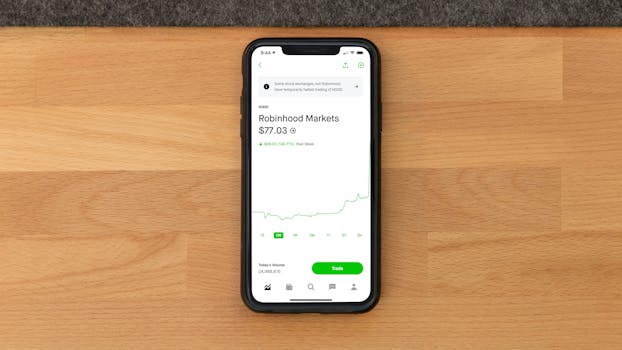 Photo by Andrew Neel on Pexels
The short answer? Fidelity wins on depth and trust. Robinhood wins on simplicity. The right pick really depends on what kind of beginner you are.
TL;DR
- Fidelity is the better long-term pick for most beginners — zero-commission trades, solid research tools, and retirement accounts all in one place.
- Robinhood is ideal if you want the fastest, cleanest entry into stocks and crypto with minimal friction.
- Both are free to start. Don't overthink it — pick one and begin investing.
 Photo by Andrew Neel on Pexels
Quick Comparison Table
| Feature | Robinhood | Fidelity |
|---|---|---|
| Stock/ETF Commissions | $0 | $0 |
| Options Trading | $0 (no per-contract fee) | $0.65/contract |
| Fractional Shares | ✅ (stocks & ETFs) | ✅ (stocks & ETFs) |
| Crypto Trading | ✅ (broad selection) | ✅ (limited — BTC, ETH) |
| Retirement Accounts (IRA) | ✅ (Roth, Traditional) | ✅ (Roth, Traditional, SEP, more) |
| Mutual Funds | ❌ | ✅ (10,000+ funds) |
| Research & Education | Basic | Extensive |
| Paper Trading | ❌ | ✅ |
| Customer Support | Chat/Email (Gold: phone) | 24/7 phone + chat |
| Premium Tier | Robinhood Gold ($5/mo) | None needed |
| SIPC Protection | ✅ | ✅ |
| Mobile App Rating (2026) | 4.2/5 | 4.4/5 |
| Best For | Simplicity, crypto | Long-term investing, retirement |
8-chapter comprehensive budgeting guide with 3 interactive calculators. Stop living paycheck to paycheck.
Robinhood Overview
Robinhood launched in 2013 and did something genuinely game-changing: it killed stock trading commissions before the rest of the industry had the nerve to. That move alone reshuffled the entire brokerage world — and honestly, every investor today owes them credit for it. By 2026, Robinhood has expanded well beyond those roots. Now it includes IRAs, a high-yield cash account (around 4–5% APY on Gold), options, crypto, and even a credit card.
But here's the thing — Robinhood's identity is still "simplicity." Everything's built to get out of your way. You can open an account and buy your first stock in under 10 minutes. That matters more for nervous first-timers than people realize.
Key Features
- Robinhood Gold (~$5/month): Unlocks margin investing, higher instant deposit limits, research from Morningstar, and a boosted APY on uninvested cash. Honestly, the Morningstar reports alone make it worth the fee.
- Fractional shares: Start with just $1 in any stock. Great if you want a piece of Amazon or Google without dropping $150+.
- Crypto trading: One of the easier ways to buy digital assets — Bitcoin, Ethereum, Dogecoin, and plenty more, all in the same app.
- Recurring investments: Set up automatic buys weekly or monthly. Actually useful for beginners still building the habit.
- IRA with match: Robinhood offers a 1% match on IRA contributions (3% for Gold members) — a rare perk that doesn't get nearly enough attention.
Pricing
- Standard account: Free
- Robinhood Gold: ~$5/month
- Options: $0 commissions, no per-contract fee
- Crypto: Spread-based pricing (typically 1–2%)
Best For
Beginners who want a fast setup, casual stock investors, people curious about crypto, and anyone who gets frustrated with cluttered financial dashboards.
Fidelity Overview
Fidelity's been around since 1946. That's not just bragging rights — it signals something real. They've made it through every market crash, regulatory change, and tech shift in nearly 80 years because they've consistently prioritized customers. In 2026, Fidelity remains one of the most complete brokerage platforms you can find, and it's entirely free for most users.
What makes Fidelity stand out for beginners is that it doesn't oversimplify things. There's a real difference between being simple and being accessible. You can start with a basic index fund strategy and, once you're ready, move into options, bonds, or international ETFs without switching platforms. After testing both, that flexibility feels genuinely valuable.
Key Features
- Zero-expense-ratio index funds (ZERO funds): Fidelity's own index funds have literally zero expense ratio — FZROX, FZILX, and more. That's not a typo. No other major broker does this.
- Fidelity Youth Account: For investors under 18. If you have kids, this is a sleeper hit — open one before they discover crypto on TikTok.
- Solid research access: Free access to equity research from 20+ providers including Refinitiv, Ned Davis, and their own analysts.
- Paper trading: Practice investing with fake money before risking real cash. Robinhood skips this, which is a real miss for beginners.
- Retirement account variety: Roth IRA, Traditional IRA, SEP-IRA, SIMPLE IRA, 401(k) rollovers — they cover every situation.
- Cash management account: Competitive APY, ATM fee reimbursements, no minimums.
Pricing
- Standard account: Free
- No account minimums
- Options: $0 commission + $0.65/contract
- Mutual funds: $0 for Fidelity funds; $49.95 for some third-party funds
- No payment for order flow on stocks (a transparency point most people miss)
Best For
Serious long-term investors, retirement savers, parents setting up accounts for kids, and anyone looking for a true all-in-one financial platform.
Feature-by-Feature Breakdown
User Interface & Ease of Use
Robinhood wins here, and frankly it's not even close. The app looks polished, runs fast, and keeps things deliberately simple — you'll find what you need without tutorials. The catch? That simplicity removes context that actually helps you make smarter moves. It's like a car with no dashboard.
Fidelity's interface has gotten much better — their mobile app is legitimately solid now — but there's definitely more going on when you first open it. Too many tabs, too much research, too much everything. But after a week or two? That depth stops feeling like clutter and starts feeling like power.
Winner: Robinhood for first-day simplicity. Fidelity once you're up to speed.
Core Features
Fidelity isn't just "more features" — it's a different animal entirely. Mutual funds, bonds, CDs, paper trading, international trading, 529 college savings plans. Robinhood doesn't cover most of this, which is a dealbreaker for certain investors.
That said, beginners don't usually need 80% of Fidelity's toolbox right away. If your plan is simply "buy VOO every month," both handle it equally fine.
Winner: Fidelity — honestly, there's no debate.
Integrations
Truth is, neither platform has killer third-party integrations. Fidelity connects with TurboTax for tax reporting — huge when April rolls around — and works with most major tax software. They also link with financial planning tools like eMoney for advisors.
Robinhood connects with a handful of tax tools but lacks that depth. One thing though: Robinhood's instant deposit integrates smoothly with major banks via Plaid, which keeps friction low for new users.
Winner: Fidelity for financial ecosystem coverage.
Pricing & Value
Both are free for core stock and ETF trading. But details really matter here.
Fidelity's ZERO index funds are a genuine edge — you literally cannot find cheaper passively-managed funds anywhere. No management fee, zero. Robinhood's IRA match (up to 3% for Gold) is compelling if you're contributing regularly and want actual money back.
The $0.65/contract options fee at Fidelity stings compared to Robinhood's zero. But here's my take: if you're a beginner dabbling in options, you're not ready. Learn the underlying stocks first.
Winner: Tie — depends on your strategy. Index fund investor? Fidelity all day. Active IRA contributor? Robinhood Gold has real value.
Customer Support
Fidelity offers 24/7 phone support. That's basically the whole conversation. When something goes sideways at 11pm on a Sunday and you're slightly panicking, Fidelity picks up. Robinhood doesn't offer phone support on the base tier — only Gold gets it — and their chat has been hit-or-miss historically.
Also worth noting: Fidelity has physical branches across the US. For less tech-savvy beginners or anyone who'd rather talk face-to-face, that's a genuinely valuable option.
Winner: Fidelity — and it's not even close.
Mobile App
Robinhood's app is still the gold standard for mobile-first aesthetics. It's smooth, intuitive, and makes investing feel approachable instead of intimidating. Fidelity's app has caught up noticeably in recent years — it's fast, thorough, and well-organized.
In 2026, both rate above 4.0 (4.2 vs 4.4 respectively). The gap has shrunk a lot. Robinhood still feels better for quick portfolio checks and casual trades. Fidelity's stronger for research and account management on the go.
Winner: Robinhood (barely) for UX. Fidelity for what you can actually do.
Security & Track Record
Both are SIPC-insured up to $500,000 ($250K cash). Both use two-factor authentication. Both are regulated by FINRA and the SEC. On paper, equal.
The real difference: Fidelity has 75+ years of solid regulatory history. Robinhood has faced SEC fines, FINRA penalties, and some serious controversies — the GameStop trading halts being the biggest. They've tightened compliance since then, but history still counts, especially when deciding who to trust with savings.
Winner: Fidelity on institutional credibility.
 Photo by David Correa Franco on Pexels
Pros and Cons
Robinhood
| ✅ Pros | ❌ Cons |
|---|---|
| Cleanest beginner UI available | No mutual funds |
| $0 options (no per-contract fee) | Limited research on free tier |
| IRA match up to 3% (Gold) | Phone support only for Gold members |
| Crypto in same app | Payment for order flow (PFOF) concerns |
| Fast account setup | No paper trading |
| Fractional shares from $1 | Regulatory controversy history |
Fidelity
| ✅ Pros | ❌ Cons |
|---|---|
| 0% expense ratio index funds | Interface can overwhelm beginners |
| 24/7 customer support | $0.65/contract for options |
| Paper trading available | Crypto selection is limited |
| Comprehensive research library | Mobile app slightly less polished |
| Every account type you'd need | Some third-party mutual fund fees |
| No PFOF on stocks |
Who Should Choose Robinhood?
- Complete beginners who learn better by doing than reading instruction manuals
- Crypto investors who want stocks and digital assets together
- Options traders who want zero per-contract fees once they actually know what they're doing
- Young investors who want a mobile-first experience and don't need retirement planning yet
- IRA contributors who want that 1–3% match — it's essentially free money
Robinhood makes sense if your investing style is "keep it simple, stay consistent." You won't get overwhelmed, and you won't pay hidden commissions.
Who Should Choose Fidelity?
- Retirement-focused beginners who want Roth IRAs, rollovers, and tax-advantaged accounts handled properly
- Buy-and-hold index fund investors who want those 0% expense ratio funds working over decades
- Parents opening custodial or youth accounts for kids
- Beginners who want room to grow — Fidelity handles your $500 starter portfolio and your eventual $500,000 retirement account with equal competence
- Anyone who values real customer support and wants a human available when things go wrong at midnight
And look — if you're in your 30s or 40s finally getting serious about retirement investing, Fidelity isn't just better. It's the obvious choice. Hard to see a reason to go anywhere else in that situation.
The Verdict
For most beginners in 2026, Fidelity is the better long-term choice. Those 0% expense ratio funds can save you thousands — realistically $10,000 or more — over 30 years compared to typical fees. Add the 24/7 support, paper trading, full retirement account options, and nearly eight decades of stability — you're looking at a platform that genuinely grows with you.
But don't count out Robinhood if simplicity is what actually gets you started. The biggest mistake beginners make isn't picking the "wrong" broker — it's not starting at all. If Robinhood's clean interface gets you investing this week while Fidelity's feature set makes you procrastinate another three months, Robinhood wins by default.
Here's my honest take: open a Fidelity account for your IRA and long-term holdings. Use Robinhood for casual stock picks and crypto if that appeals to you. Nothing says you can't use both — plenty of smart investors do.
- 🏆 Best for beginners overall: Fidelity
- ⚡ Best for simplicity/crypto: Get Robinhood
FAQ
Q: Is Robinhood safe for beginners in 2026? Yes — Robinhood is SIPC-insured and regulated by FINRA and the SEC. It's a legitimate platform. The past controversies (GameStop halts, SEC fines) are worth knowing about, but they don't make everyday investing risky.
Q: Does Fidelity have a minimum to open an account? Nope. Zero minimums for brokerage and IRA accounts. You can literally start with $1.
Q: Which is better for a Roth IRA — Robinhood or Fidelity? Fidelity, generally — I'd say that pretty confidently. Their ZERO index funds have zero expense ratio, their research tools work better for long-term planning, and account flexibility is tough to beat. But here's the counterargument: Robinhood's 3% IRA contribution match on Gold is genuinely compelling if you're contributing regularly. Run the actual math for your situation first.
Q: Can I transfer from Robinhood to Fidelity later? Totally. ACATS transfers between brokers are standard. Even better — Fidelity reimbursses the transfer fee (typically $75–100) that Robinhood charges. Takes about 5–7 business days, but it's straightforward.
Q: Does Robinhood offer index funds? Robinhood offers ETFs that track indexes — like VOO or VTI — but not traditional mutual funds. Fidelity offers both, including those 0% expense ratio index mutual funds you simply cannot find elsewhere.
Q: Which broker has better tools for learning how to invest? Fidelity, and it's not even close. They have a dedicated learning center, regular webinars, research from 20+ providers, and paper trading so you practice with fake money first. Robinhood has improved educational content lately, but it still feels surface-level compared to Fidelity's free offerings. The focus on simplicity over education is honestly one of Robinhood's bigger weaknesses for beginner investors.