Robinhood vs Fidelity 2026: Which Broker Actually Wins?
Here's a bold claim to start: most people picking between these two platforms are asking the wrong question. It's not really "which is better" — it's "which is better for you." And honestly, the answer is almost never the same twice. Robinhood vs Fidelity is one of the most Googled brokerage comparisons out there in 2026, and for good reason — these two platforms look like they're playing the same game, but they're really not. Robinhood is a stripped-down, mobile-first trading app built for speed and simplicity. Fidelity is a full-service financial institution with decades of infrastructure, research tools, and account types that Robinhood simply doesn't offer. Pick wrong and you might end up scrambling for features later that just aren't there.
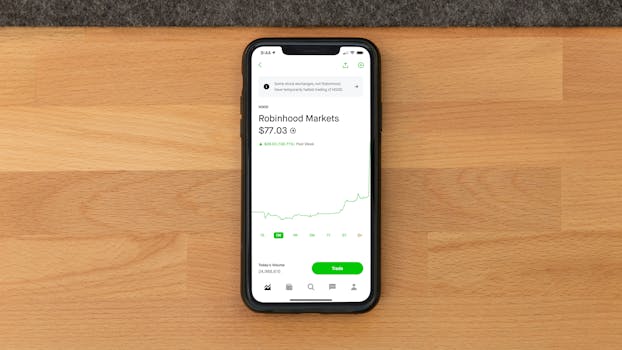 Photo by Andrew Neel on Pexels
This comparison is for anyone from a first-time investor to someone managing a serious retirement portfolio who's wondering whether it's worth switching platforms — or running accounts on both.
Quick Comparison Table: Robinhood vs Fidelity 2026
| Feature | Robinhood | Fidelity |
|---|---|---|
| Stock & ETF Trading | ✅ Commission-free | ✅ Commission-free |
| Options Trading | ✅ $0 per contract | ✅ $0.65 per contract |
| Fractional Shares | ✅ Yes | ✅ Yes |
| Mutual Funds | ❌ No | ✅ 10,000+ funds |
| Retirement Accounts (IRA) | ✅ Basic IRA (Roth, Traditional) | ✅ Full IRA suite + SEP, SIMPLE |
| Crypto Trading | ✅ Yes (limited coins) | ✅ Yes (via Fidelity Crypto) |
| Research Tools | ⚠️ Basic | ✅ Extensive (incl. third-party) |
| Paper Trading | ❌ No | ✅ Yes |
| Cash Management | ✅ 4.9% APY (Gold members) | ✅ Fidelity Cash Management Account |
| Customer Support | ⚠️ Chat/Email | ✅ Phone, chat, in-person branches |
| Mobile App Rating | ⭐ 4.2/5 (App Store) | ⭐ 4.8/5 (App Store) |
| Account Minimum | $0 | $0 |
| Overall Rating | 3.8/5 | 4.7/5 |
 Photo by Monstera Production on Pexels
Who Should Use What (Read This First)
Before we dive in, here's the short version:
Choose Robinhood if you're a casual trader who wants a dead-simple interface, you're into crypto alongside stocks, and you don't need hand-holding or complex account structures.
Choose Fidelity if you're building long-term wealth, need retirement-specific accounts, want access to real research, or care about customer support that actually picks up the phone.
Look, most serious investors end up at Fidelity eventually. But Robinhood has a real role to play for a specific type of user — and it's genuinely gotten better in 2026.
8-chapter comprehensive budgeting guide with 3 interactive calculators. Stop living paycheck to paycheck.
Robinhood Overview
Robinhood launched in 2013 with a genuinely radical idea: commission-free trading for everyone. It worked. The platform democratized retail investing and has evolved significantly since those early days. In 2026, Robinhood offers stocks, ETFs, options, crypto, and even a retirement IRA product with a 1% match for regular members and 3% for Gold members — which is actually solid and worth paying attention to.
Key Features
- Robinhood Gold: $5/month subscription that unlocks 4.9% APY on uninvested cash, 3% IRA match, larger instant deposits, and Level II Nasdaq data
- Options Trading: $0 per contract, with a clean options flow UI (though it's not trying to be as powerful as thinkorswim, and that's fine)
- Crypto: BTC, ETH, DOGE, and growing — tradeable 24/7
- 24-Hour Market: Robinhood offers extended hours trading across a wide range of securities, which is a real differentiator
- Fractional Shares: Buy as little as $1 of most major stocks
Best For
Active traders, crypto-curious investors, younger users who want a no-friction mobile experience, and people who want to explore options without complicated fee structures.
Pricing
| Plan | Cost |
|---|---|
| Basic Account | Free |
| Robinhood Gold | $5/month |
| Options | $0/contract |
| Stock/ETF Trades | $0 |
| Crypto Trades | Spread-based (~1-2%) |
One thing to know: Robinhood still makes money through payment for order flow (PFOF) and crypto spreads. That's not shady, but it's worth understanding where the revenue comes from. Transparency matters.
Fidelity Overview
Fidelity's been around since 1946 — and look, that's not just marketing. It means the platform survived multiple market crashes, regulatory overhauls, and complete tech revolutions. In 2026, it's genuinely one of the most complete brokerage platforms available to retail investors, and it's been competitive on pricing. Zero-commission trades, zero-expense-ratio index funds (their ZERO fund series), and no account minimums made it accessible to beginners too — not just wealthy folks.
Something cool: Fidelity's ZERO funds were kind of a shock when they launched in 2018 because no one thought a major fund company would actually go to 0% expense ratios. Other providers scrambled to keep up, but Fidelity still leads here.
Key Features
- Research Hub: Access to Morningstar, S&P Capital IQ, Refinitiv, and Fidelity's own analysis — this is miles ahead of Robinhood
- Active Trader Pro: A downloadable desktop platform with real-time analytics, customizable charts, Level II quotes, and advanced order types
- Full Account Suite: Taxable brokerage, traditional/Roth/SEP/SIMPLE IRA, 401(k) plans, 529 college savings, HSAs, trust accounts
- Fidelity ZERO Funds: Index funds with literally 0% expense ratios
- Paper Trading: A simulated trading environment for practice (Robinhood still doesn't have this, which I find strange for a beginner-focused platform)
- Branches: 200+ physical investor centers across the U.S.
Best For
Long-term investors, retirement savers, anyone who wants serious research tools, small business owners who need SEP or SIMPLE IRAs, and people who actually want to reach a real human on the phone.
Pricing
| Service | Cost |
|---|---|
| Stock/ETF Trades | $0 |
| Options | $0.65/contract |
| Mutual Fund Trades | $0–$49.95 (varies) |
| Fidelity ZERO Funds | 0% expense ratio |
| Account Minimum | $0 |
Feature-by-Feature Breakdown: Robinhood vs Fidelity
User Interface & Ease of Use
Robinhood wins on simplicity, hands down. The app is clean, fast, and deliberately minimal — almost zero learning curve. Tap a stock, see the price, buy it. That's basically it. When I first used Robinhood, I was struck by how frictionless the whole thing felt, and that's genuinely valuable for someone who's never invested before.
Fidelity's mobile app has gotten significantly better (that 4.8 App Store rating is real), but the full desktop platform — Active Trader Pro — requires more learning. And here's the thing: that complexity exists because you can actually do more with it. More order types, more account management, more data. You're not confused because the design is poor; you have 47 more options available than Robinhood gives you.
If you're starting out: Robinhood. If you're serious about long-term investing and want to grow into your platform over the next 10, 20, 30 years: Fidelity.
Core Features
This isn't even close. Fidelity offers a breadth of financial products that Robinhood simply can't match — mutual funds, 529 plans, HSAs, trust accounts, and a paper trading simulator. Robinhood's strength is executing a focused set of features cleanly, and that's a solid strategy. But you will hit limits eventually.
One area where Robinhood holds its own: 24-hour market access across a wide range of stocks. Fidelity offers extended hours too, but not the same 24/5 window. For active traders who want to react to overnight news without waiting for pre-market, that's a genuine advantage.
Integrations
Fidelity integrates with Quicken, TurboTax, Personal Capital (now Empower), and various financial planning tools. You can connect it to Mint or other aggregators too. It's built to work within a broader financial ecosystem — the kind of setup where all your accounts talk to each other and you actually know your net worth at any given moment.
Robinhood's integration story is thinner. It connects to some tax software and you can export data, but it doesn't play as well with other tools. Honestly, this probably doesn't matter much if you're just trading stocks. But if you're managing a holistic financial picture — mortgage, investment accounts, emergency fund, retirement — Fidelity works better with the rest of your financial life.
Pricing & Value
Both platforms charge zero on stock and ETF trades. The real differences show up in the details:
- Options: Robinhood charges $0/contract. Fidelity charges $0.65. For high-frequency options traders making 50+ trades a month, that gap compounds fast — we're talking $390+ per year in extra costs
- Mutual Funds: Fidelity has 10,000+ mutual funds; Robinhood has zero
- Crypto spreads: Robinhood charges ~1-2% spread. Fidelity Crypto is similar
- Fidelity ZERO funds: 0% expense ratio. That's hard to beat anywhere
- Robinhood Gold at $5/month: The 3% IRA match alone could easily outvalue the subscription if you're contributing regularly
Here's something worth noting: Robinhood Gold is genuinely underrated. If you're contributing to an IRA, a 3% match beats most employer 401(k) matches — which is kind of wild to say about a retail brokerage app, but there it is.
Customer Support
Fidelity wins. Definitively. You can call them (they actually answer), visit a branch, chat live, or dive into an extensive self-help library. For anyone who's ever needed to resolve an account issue on deadline — say, before a tax filing cutoff — knowing there's a phone number you can dial is worth more than people realize until they need it.
Robinhood offers in-app chat and email support. Response times have improved, but it's not the same league. They added phone support for certain account types, but it's not everywhere and not particularly fast.
Mobile App
Both apps are genuinely solid in 2026 — Robinhood from the beginning, Fidelity through continuous improvement. The functional gap has closed a lot over the past few years. Fidelity's app now supports customizable watchlists, real-time alerts, advanced charts, and biometric login. Robinhood's app still has the edge in aesthetic polish and raw speed.
For most users, either app will feel fine day-to-day. If mobile is your only interface, Robinhood is still slightly more intuitive right out of the box.
Security & Compliance
Both platforms offer SIPC protection up to $500,000 (including $250K for cash) and use two-factor authentication. Where Fidelity pulls ahead: supplemental coverage through Lloyd's of London for accounts above SIPC limits, which matters if you have a seven-figure account.
Fidelity's institutional-grade security infrastructure — they're managing hundreds of billions in assets — is proven in ways Robinhood's simply isn't yet. That said, Robinhood hasn't had major security incidents affecting user funds. Both are regulated by FINRA and the SEC.
 Photo by cottonbro studio on Pexels
Pros and Cons
Robinhood
| Pros | Cons |
|---|---|
| Clean, beginner-friendly UI | No mutual funds |
| $0 options contracts | Limited research tools |
| 24/7 crypto + 24-hour stock market | No paper trading |
| 3% IRA match (Gold members) | Customer support is weak |
| Crypto + stocks in one app | PFOF revenue model |
| No account minimum | Limited account types |
Fidelity
| Pros | Cons |
|---|---|
| Full account suite (IRA, 401k, 529, HSA) | $0.65/contract options fee |
| Exceptional research tools | Active Trader Pro has a learning curve |
| 0% expense ratio ZERO funds | Interface less sleek than Robinhood |
| Strong customer support (phone + branches) | Crypto selection still limited |
| Paper trading available | Some mutual funds have transaction fees |
| Best-in-class security coverage | No IRA contribution match |
Who Should Choose Robinhood?
- New investors who want to start with $1 and learn without being hit with 47 account options
- Options traders who execute high volumes and care about that $0/contract price point
- Crypto investors who want stocks and crypto in one app without juggling multiple services
- Robinhood Gold subscribers who are actively contributing to a Roth IRA and want that 3% match
- Active traders who want 24-hour market access to react to overnight news
- Younger investors who live on mobile and don't need complex account structures yet
Who Should Choose Fidelity?
- Retirement savers who need IRA, SEP IRA, or 401(k) infrastructure that scales with your contributions
- Long-term buy-and-hold investors who want access to Fidelity ZERO funds and low-cost index investing
- Anyone who needs real research — like, people who actually read earnings reports and analyst notes before buying
- Small business owners who need business retirement account options like SEP or SIMPLE IRAs
- Parents saving for college who need 529 accounts
- High-net-worth investors who want the supplemental SIPC insurance and institutional-grade security for accounts over $500K
- Anyone who's had a bad experience with terrible support — Fidelity's customer service is genuinely refreshing
The Verdict: Robinhood vs Fidelity 2026
Here's where I land: Fidelity is the better platform for most investors in 2026. The research tools, account variety, security depth, and customer support represent a level of completeness that Robinhood doesn't match. It's not controversial — the ratings back it up (4.7 vs 3.8).
But — and this matters — Robinhood isn't a bad choice for its target user. If you're an active trader focused on options and crypto, the $0/contract pricing and unified crypto/stock interface have real value. When I tested the 3% IRA match, it actually stacks up as one of the better perks in retail investing.
My practical suggestion: start with Fidelity as your primary account, especially for retirement savings and long-term holdings. If you want to trade options aggressively or play with crypto, open a Robinhood Gold account on the side. They're not mutually exclusive — both have $0 account minimums, so there's no reason not to run both.
If you're choosing just one? Go with Fidelity. The depth wins. If you're young, just starting out, and want the simplest possible entry into building an investing habit, Get Robinhood will get you there.
FAQ: Robinhood vs Fidelity 2026
Is Robinhood safe to use in 2026?
Yes. Robinhood is FINRA-regulated, SIPC-insured up to $500,000, and uses two-factor authentication. It's a legitimate, SEC-registered broker-dealer with no major security incidents affecting user funds. That said, Fidelity's supplemental Lloyd's of London insurance gives higher-net-worth investors more coverage room — worth knowing if your account is pushing into six or seven figures.
Does Fidelity charge commissions in 2026?
Nope — stock and ETF trades are commission-free. Options trades cost $0.65 per contract (versus Robinhood's $0). Fidelity ZERO index funds carry a 0% expense ratio, which is still remarkable. Some mutual funds may have transaction fees depending on the fund family, so check before you buy.
Can I trade crypto on both Robinhood and Fidelity?
Yes, both platforms support crypto in 2026. Robinhood historically offered a broader coin selection and more integrated experience — it feels more native to the platform. Fidelity Crypto started with Bitcoin and Ethereum before expanding. Both use a spread-based pricing model rather than flat commissions, so factor that ~1-2% into your math.
Is Robinhood Gold worth it?
Honestly, for IRA contributors, yes. If you're putting $500/month into a Roth IRA, the 3% match is worth $15/month against the $5/month subscription cost. You're coming out $10 ahead before you even touch the Level II Nasdaq data or the 4.9% APY on cash. For pure stock traders who don't use those extras — probably skip it.
Can beginners use Fidelity?
Absolutely, and Fidelity is actually underrated as a beginner platform. They've invested heavily in guided account setup, educational content, and a mobile app that doesn't require a finance degree. Start with $1 if that's what you have — no account minimum. The real advantage is that Fidelity scales with you as your needs grow, so you won't outgrow it in two years.
Which has better retirement account options: Robinhood or Fidelity?
Fidelity, and it's not particularly close. Fidelity supports traditional IRAs, Roth IRAs, SEP IRAs, SIMPLE IRAs, rollover IRAs, 401(k) plans, 529 college savings accounts, and HSAs. Robinhood offers traditional and Roth IRAs with a contribution match — genuinely great — but that's it. For anyone with self-employment income, a side business, or kids approaching college age, Fidelity is really the only choice between these two.