Acorns vs Robinhood 2026: Which Investing App Actually Works for You?
Here's the thing: most people download the wrong investing app first, get confused after a few months, and just give up. I know because I've been there.
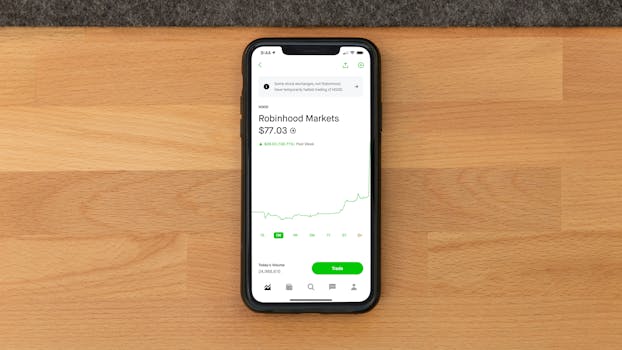 Photo by Andrew Neel on Pexels
When I started getting serious about my personal finances—outside of all the chaos of running a small business—I grabbed both Acorns and Robinhood in the same week. I figured why not test drive both and see what stuck. That was a few years ago, and my take on each has definitely shifted since then. If you're hunting for a real "Acorns vs Robinhood 2026" comparison that doesn't sound like a robot wrote it, you're in the right place.
Both apps let you invest without needing a finance degree, but that's pretty much where the similarities stop. Acorns is built for people who want investing to just happen in the background. Robinhood is built for people who actually want to control things—or at least feel like they're steering the ship. Neither approach is wrong, but picking the wrong one for your personality? That'll waste your time, money, or both.
This breakdown is aimed at real people—side hustlers, small business owners, first-time investors, or anyone tired of watching savings earn basically nothing while inflation slowly eats away at your purchasing power.
Quick Comparison Table: Acorns vs Robinhood 2026
| Feature | Acorns | Robinhood |
|---|---|---|
| Best For | Passive, hands-off investors | Active traders & DIY investors |
| Minimum Investment | $5 | $0 |
| Monthly Fee | $3–$12/month | $0 (Gold: ~$6.99/month) |
| Investment Types | ETF portfolios only | Stocks, ETFs, options, crypto, futures |
| Fractional Shares | Yes (via portfolios) | Yes |
| Retirement Accounts | Yes (IRA via higher tiers) | Yes (IRA available) |
| Automatic Investing | Yes (Round-Ups, recurring) | Limited |
| Crypto | Limited (Bitcoin, Ethereum) | Extensive |
| SIPC Protected | Yes | Yes |
| Mobile App Rating | 4.7 (App Store) | 4.2 (App Store) |
| Affiliate Link | Try Acorns | Get Robinhood |
 Photo by cottonbro CG studio on Pexels
Acorns Overview: The "Set It and Forget It" Investing App
Here's Acorns' main pitch, and it's pretty clever: what if your spare change became investments automatically? You link your debit or credit card, and every time you spend $3.60 on coffee, Acorns rounds it up to $4.00 and invests that $0.40. Over time, those tiny amounts genuinely add up—especially if you're also setting up recurring daily, weekly, or monthly deposits.
Acorns started back in 2014, and by 2026 it's turned into a full personal finance platform. It's way more than just the round-ups now.
Acorns Key Features
- Round-Ups: Automatically invests spare change from linked cards
- Acorns Invest: Your taxable brokerage account with five pre-built ETF portfolios (ranging from conservative to aggressive)
- Acorns Later: IRA options including Traditional, Roth, and SEP IRAs—available on higher tiers
- Acorns Early: UTMA/UGMA custodial accounts for kids (Gold plan only)
- Acorns Checking: A debit card featuring built-in Round-Ups and no overdraft fees
- Earn: Cashback from partner brands that flows straight into your investment account
- Smart Deposit: Auto-allocates a percentage of your paycheck before it hits your spending account
Acorns Pricing (2026)
- Bronze: $3/month—basic investing plus Round-Ups
- Silver: $6/month—adds IRA and premium financial advice tools
- Gold: $12/month—adds custodial accounts, 25% match on your first $200 invested (for a year), and banking perks
Here's something real: $3/month sounds cheap until you do the math. If you're only investing $20/month through round-ups, that fee is eating 15% of what you're actually putting in. You really need to be investing at least $150–$200 a month for the fee structure to make sense. I'd say that's Acorns' biggest weakness—it can quietly hurt the exact beginners it's trying to help.
Who Is Acorns Best For?
People who struggle with saving. New investors who feel intimidated by finance. Parents wanting to start investing for their kids. Anyone who's thought "I'll invest when I have more money"—Acorns is designed to prove you don't need more money, you need more consistency.
8-chapter comprehensive budgeting guide with 3 interactive calculators. Stop living paycheck to paycheck.
Robinhood Overview: The DIY Investor's Playground
Robinhood shook things up in 2013 by introducing commission-free trading. Before that, you were paying $5–$10 per trade just to buy a single stock. Every major brokerage eventually had to follow suit, so we all owe Robinhood a thanks for that—even if their early days were pretty chaotic. (Quick fact: Charles Schwab didn't go commission-free until 2019, a full six years later. That shows how much pressure Robinhood put on the industry.)
By 2026, Robinhood is far beyond its scrappy startup days. It's now a serious platform with retirement accounts, a credit card, options trading, crypto, futures, and a premium tier with genuinely solid research tools.
Robinhood Key Features
- Commission-Free Stock & ETF Trading: Buy and sell with no per-trade fees
- Options Trading: No contract fees (still a big deal in 2026)
- Crypto: Access dozens of cryptocurrencies round-the-clock
- Fractional Shares: Buy as little as $1 worth of any stock
- Robinhood Gold: Premium tier (~$6.99/month) with 5% APY on uninvested cash, Morningstar research, and margin investing
- IRA with Match: A 1% match on IRA contributions (3% for Gold members)—honestly one of the best IRA features available in the app space
- Robinhood Legend: A desktop trading platform with advanced charting for serious traders
- 24-Hour Trading: Extended hours trading, including weekends for some assets
Robinhood Pricing (2026)
- Free: $0/month—commission-free stocks, ETFs, crypto, options
- Gold: ~$6.99/month—higher APY on cash, margin, premium research, bigger IRA match
The free tier is actually free. No minimums, no hidden fees on basic trades. The Gold subscription is worth it if you keep a solid cash balance or make regular IRA contributions.
Who Is Robinhood Best For?
Self-directed investors wanting to pick their own stocks. Crypto enthusiasts. Anyone who wants to trade options without paying contract fees. People who want to learn how markets work by doing—not by handing money to an algorithm and hoping it works out.
Feature-by-Feature Breakdown: Acorns vs Robinhood 2026
User Interface & Ease of Use
Acorns takes this one easily. The app is designed so you barely have to use it. Set your portfolio, link your cards, and mostly just watch your balance grow. There's nothing intimidating—no charts to interpret, no order types to figure out.
Robinhood has come a long way from its stripped-down early days. The interface is clean and user-friendly, but it does require you to be somewhat engaged. You're making decisions about what to buy, when, and how much. That's not complicated, but it's not nothing—new investors can definitely feel lost without some basic knowledge.
Winner: Acorns (for total beginners). Robinhood for people who want control.
Core Features
These apps are honestly doing different things. Acorns automates your investing through pre-built portfolios. Robinhood gives you a full brokerage experience. Acorns' Round-Up feature is clever and unique. Robinhood's 24-hour trading and commission-free options are legitimately powerful.
If you want automation and simplicity, Acorns is purpose-built for that. If you want flexibility and range—stocks, ETFs, options, crypto, futures—Robinhood isn't really going up against Acorns. It's competing with Fidelity and Charles Schwab.
Winner: Tie—depends on what you actually need.
Integrations
Acorns hooks into your bank accounts and credit/debit cards for Round-Ups. It works with direct deposits through its own checking account. There's also the "Earn" program where shopping at partners like Walmart or Nike sends cashback straight into your investments—it feels like magic when you first see it happen.
Robinhood connects with external bank accounts for transfers, but doesn't have the same spend-and-invest ecosystem. Its credit card product (launched recently) does offer integrated cashback, but it's a separate tool.
Winner: Acorns—if you like a connected spend-and-invest experience.
Pricing & Value
This is more complicated than it first seems, and here's my actual take: Robinhood's free tier is so good that it makes Acorns' pricing honestly hard to justify for smaller investors. Robinhood is truly free and offers more investment choices than Acorns' paid plans. If you're putting in $50–$100/month, Acorns' $3–$12/month fee is a real drag on your returns. Robinhood asks for nothing for that same investing activity.
That said, Acorns' automation has real value. If the monthly fee keeps you from procrastinating for years, it's worth it. But on a pure cost-per-feature basis, it's not even close.
Winner: Robinhood—better value, especially at the free tier.
Customer Support
Let's be honest: neither app is winning any customer service awards. Both lean on in-app chat and email support. Acorns added phone support for higher-tier subscribers. Robinhood has seriously improved since its notoriously bad early days, and Gold members get priority support now.
Neither offers the hands-on guidance you'd get from a traditional financial advisor or a full-service brokerage like Fidelity.
Winner: Slight edge to Acorns—phone support on paid plans actually matters when something goes wrong.
Mobile App
Both apps are polished by 2026 standards. Acorns scores higher in the App Store and Google Play—around 4.7 versus 4.2. The Acorns app feels calm and organized. The Robinhood app feels like a financial tool: useful and functional, but can feel overwhelming if you're deep into options chains at 11pm.
Robinhood's "Legend" desktop platform is a real upgrade for desktop users, but on mobile, Acorns wins for everyday usability.
Winner: Acorns (mobile). Robinhood for desktop work.
Security & Compliance
Both come with SIPC insurance up to $500,000 for securities, and both use 256-bit encryption and two-factor authentication. One thing to know: Robinhood had a notable data breach in 2021 that affected around 7 million users—they've upgraded security significantly since then, but it's fair to factor that history in when making your decision.
Both Acorns and Robinhood are registered with the SEC and FINRA. As of 2026, Robinhood is a properly regulated platform despite its rocky early days.
Winner: Tie—both are regulated, legitimate brokers.
 Photo by Vitaliy Fursov on Pexels
Pros and Cons
Acorns
| ✅ Pros | ❌ Cons |
|---|---|
| Super easy to start | Monthly fees can hurt small investors |
| Round-Ups make saving automatic | Can't pick individual stocks |
| Great for building a savings habit | Limited investment options (ETFs only) |
| Custodial accounts for kids | IRA only on Silver/Gold tiers |
| Clean, calming mobile app | Not ideal for active investors |
| Earn cashback that becomes investments | $5 minimum to invest |
Robinhood
| ✅ Pros | ❌ Cons |
|---|---|
| Actually free basic account | Easy to make impulsive trades |
| Huge investment selection | No automated round-up investing |
| IRA with contribution match | Customer support can be inconsistent |
| Options trading with no contract fees | Past data breach is a trust concern |
| 24-hour trading on some assets | Gold features require paid subscription |
| Strong desktop platform (Legend) | Can overwhelm total beginners |
Who Should Choose Acorns?
- New investors who feel intimidated by markets and don't know where to start
- People who struggle with saving habits and need automation to actually set money aside
- Parents wanting a simple way to build wealth for their kids through custodial accounts
- Small business owners who want passive personal investing while juggling too much else (guilty here—zero bandwidth to watch tickers)
- Anyone who regularly uses a debit or credit card and wants Round-Ups doing the heavy lifting
- People comfortable with ETF portfolios who don't need to pick individual stocks
If you're starting from zero and want something that grows quietly in the background, Try Acorns.
Who Should Choose Robinhood?
- Self-directed investors who want to research and pick their own stocks
- Crypto enthusiasts who want a wide selection of digital assets
- Options traders who want commission-free contracts (still rare in 2026)
- IRA savers who want a contribution match—3% on Gold is genuinely competitive
- Active traders who want extended hours, 24/7 crypto trading, and advanced charting
- Anyone who wants a genuinely free account with no monthly fee
If you actually want to learn how investing works, or if you already know what you're doing, Get Robinhood gives you the tools without hand-holding.
The Verdict: Acorns vs Robinhood 2026
Don't let anyone tell you one is universally better—that's just lazy thinking. They're built for genuinely different people with different goals.
Choose Acorns if: You want to build an investing habit without thinking about it, you're brand new to this, or you're a busy person (hello, fellow small business owners) who'll realistically never log in to manually trade. The automation is real and valuable—but make sure you're contributing enough monthly to offset the fee, or you're working against yourself.
Choose Robinhood if: You want full control, you're interested in stocks, crypto, or options, or you want a free platform with serious features. The IRA match alone is worth it for anyone making consistent retirement contributions. And don't let Robinhood's rocky early reputation scare you off—it's a very different product in 2026 than it was back in 2021.
My actual take: I use both, and that's not a cop-out answer. Acorns runs quietly in the background on my personal accounts, rounding up purchases and building a buffer I barely notice. For anything active—retirement contributions, some crypto exposure—I use Robinhood. They're not competing in my financial life; they're doing completely different jobs.
If I had to pick just one for most people reading this? Acorns for beginners. Robinhood for everyone else.
FAQ: Acorns vs Robinhood 2026
1. Is Acorns or Robinhood better for beginners? Acorns, by a wide margin. It needs almost zero financial knowledge—set up a portfolio, link your accounts, and let Round-Ups and deposits do the work. Robinhood hands you a full brokerage, which is great once you know what you're doing and frankly confusing before that.
2. Can I use both Acorns and Robinhood at the same time? Absolutely—and honestly, this is probably the smartest move for lots of people. Use Acorns for passive automated investing and Robinhood for active trades or retirement accounts. There's nothing stopping you, and they work pretty well together. I've been doing this for a while now and it just makes sense.
3. Does Robinhood charge fees for stock trades? Nope. Commission-free trading is still Robinhood's flagship feature in 2026. Basic stock and ETF trades cost nothing, and options trades have zero contract fees. The Gold subscription at $6.99/month is totally optional.
4. Is my money safe in Acorns and Robinhood? Both platforms carry SIPC insurance up to $500,000 for securities, and both use standard security like two-factor authentication and 256-bit encryption. Neither is a traditional bank (though Acorns offers FDIC-insured checking), so the same protections you'd expect from any licensed brokerage apply.
5. What's the minimum to start investing with each app? Acorns requires $5 to get going. Robinhood has zero minimum—you can buy fractional shares starting at $1. If you're working with tiny amounts right now, Robinhood technically gives you more flexibility on day one.
6. Does Acorns have a free plan? No, and this matters. As of 2026, the cheapest Acorns plan is $3/month (Bronze). There's no free tier. That's a real disadvantage compared to Robinhood's genuinely free base account, and it's something to seriously think about if you're just starting with small contributions—because that $3 will represent a surprisingly big chunk of your returns until your balance grows.